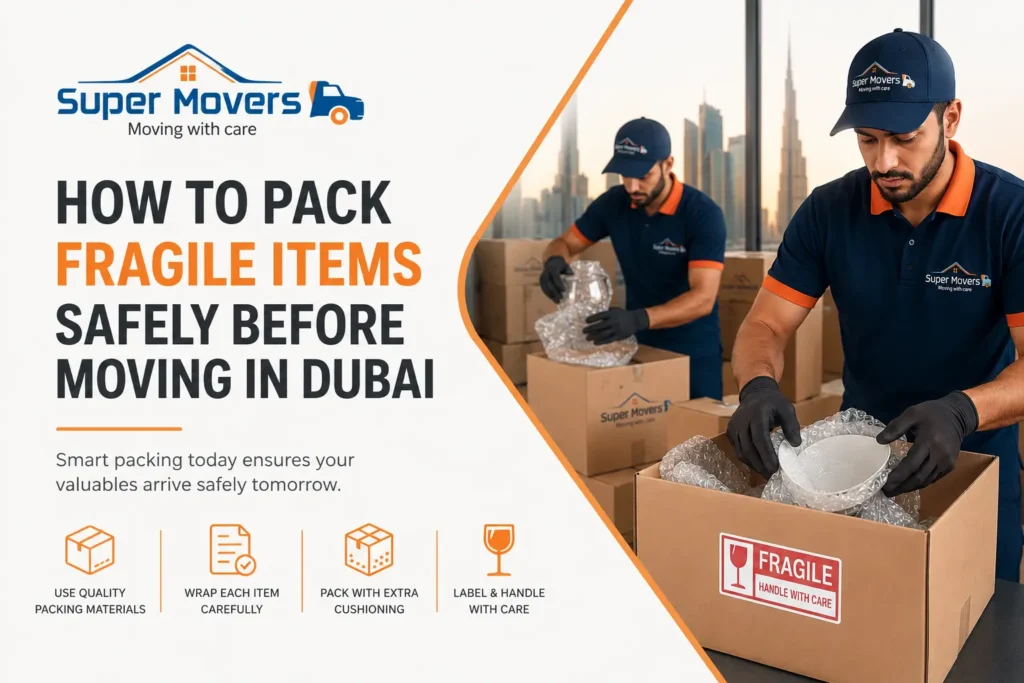

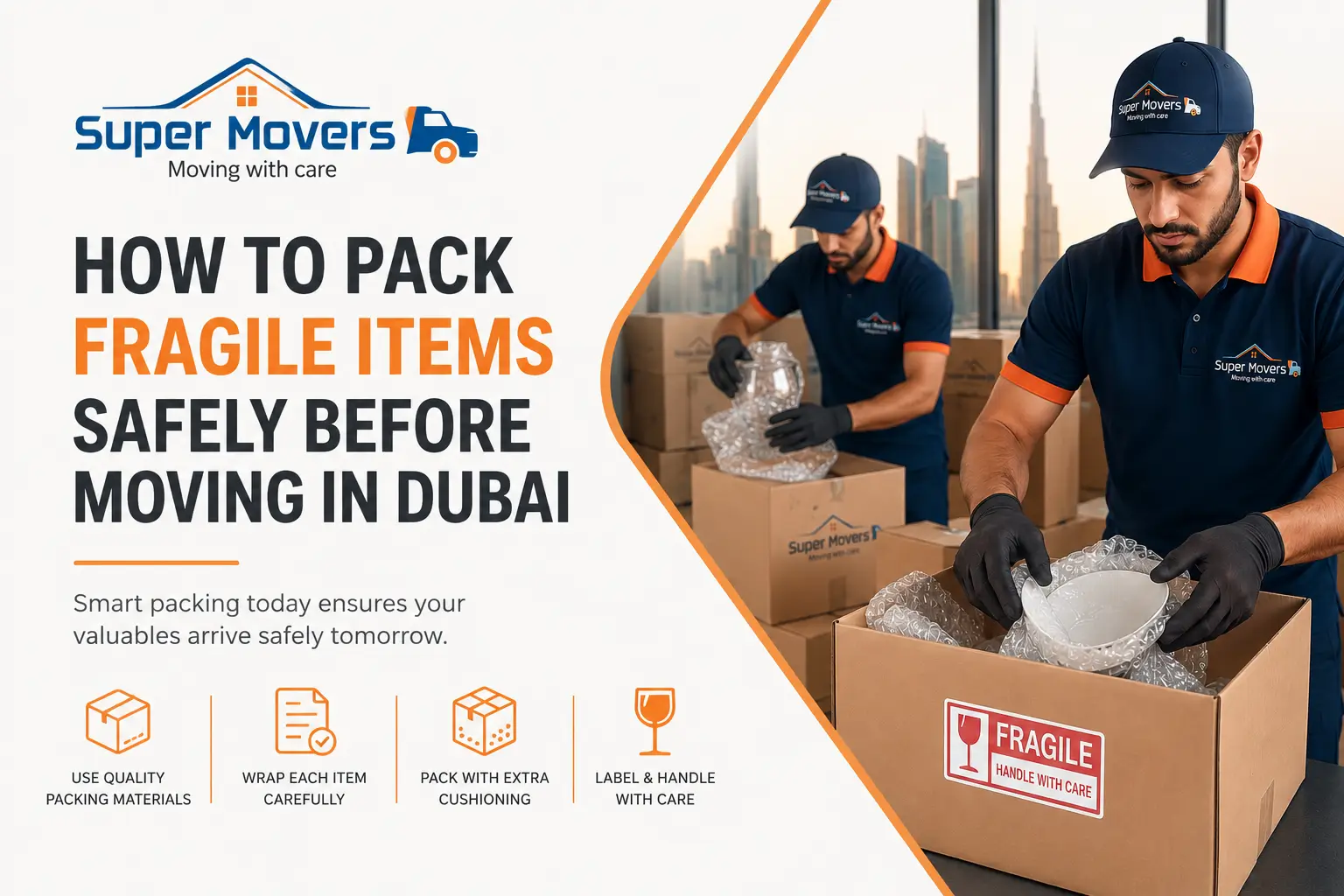
Packing fragile items is one of the most important parts of any move. Glassware, mirrors, electronics, artwork, and decorative pieces can easily break if they are not packed the right way. During moving, boxes face pressure, vibration, stacking, and sudden movement. Without proper protection, even a small impact can cause damage.
In Dubai, moving comes with extra challenges. High temperatures, dust, and long loading times can affect delicate items, especially electronics and glass surfaces. That is why fragile packing needs more than just a box and tape.
The right materials, the right packing method, and proper labeling all work together to keep your valuables safe. In this guide, we will explain how to pack fragile items step by step so your move becomes safer and more organized.
Why Fragile Items Need Special Packing During a Move
Fragile items are different because they cannot handle pressure the same way as normal household goods. A sofa can handle weight on top of it, but a glass plate cannot. A wardrobe can survive small bumps, but a mirror can crack from one wrong hit.
This is why fragile items need extra protection.
During moving, boxes are loaded into trucks, stacked with other items, and shifted during transportation. If there is empty space inside the box, the item can move. Movement creates impact. Impact increases breakage risk.
This is one of the biggest reasons fragile items break.
Proper packing reduces this risk because every protective layer absorbs pressure before it reaches the item itself.
Bubble wrap cushions the surface. Foam sheets absorb shock. Packing paper fills empty gaps. Strong boxes keep everything secure.
The goal is simple: stop movement before damage starts.
Choosing the Right Packing Materials for Better Protection
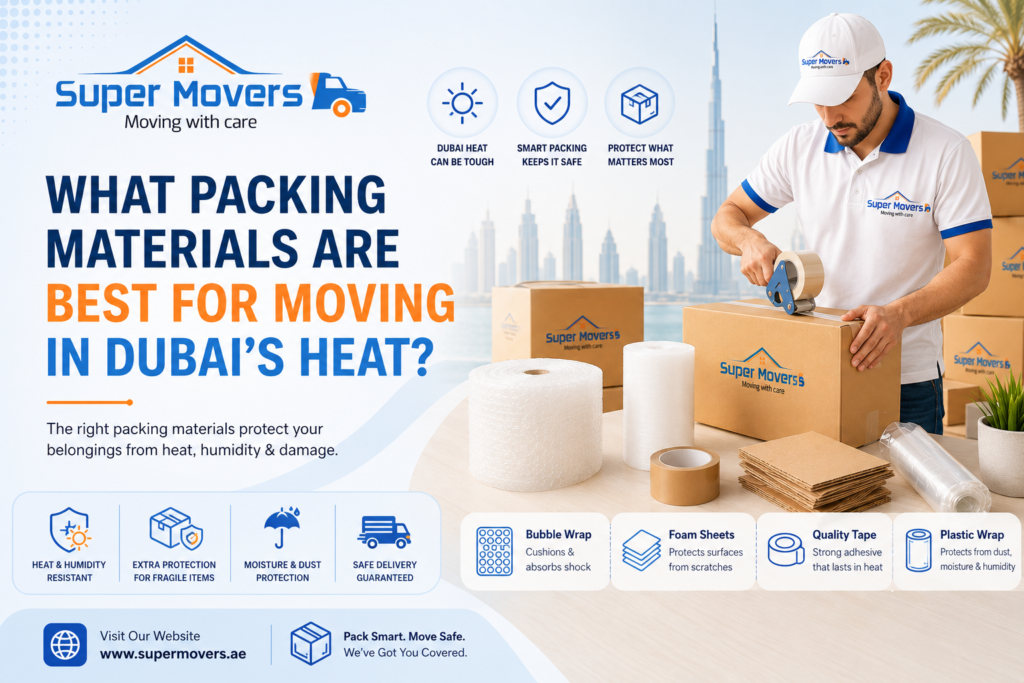
Packing materials are not all the same. Each material has a different job, and choosing the wrong one can increase the risk of damage.
For example, bubble wrap works best for glass and delicate decor because it creates small air pockets that absorb impact. Foam sheets are better for electronics because they protect screens and reduce pressure marks.
Here are the most important materials for fragile packing:
| Packing Material | Best Used For |
| Bubble Wrap | Glassware, vases, mirrors |
| Foam Sheets | TVs, laptops, monitors |
| Packing Paper | Filling empty spaces |
| Double-Wall Boxes | Heavy fragile items |
| Packing Peanuts | Extra cushioning |
| Corner Protectors | Mirrors, frames, glass tables |
| Packing Tape | Box sealing and support |
Using strong materials matters even more in Dubai because heat can weaken low-quality tape and soft boxes during transport.
Better materials create stronger protection.
How to Pack Glassware and Kitchen Items Safely
Kitchen items are among the most fragile belongings in any home. Plates, bowls, cups, and glasses can break easily if they touch each other during transport.
The best way to pack them is individually.
Wrap each plate with packing paper first. Then add bubble wrap around it. Stack plates vertically instead of laying them flat because vertical packing spreads pressure better.
Glasses should be wrapped separately and placed upright inside the box.
Empty spaces inside the box should always be filled with packing paper or foam because loose space allows movement.
Movement inside the box is one of the main reasons kitchen items crack.
A properly packed kitchen box should feel tight, balanced, and secure.
How to Pack Mirrors, Frames and Wall Decor
Mirrors and wall decorations are highly sensitive because their flat surfaces can crack under pressure.
The first step is to cover the surface with packing paper. After that, wrap the entire piece with bubble wrap. Corner guards should be added because corners are the weakest points.
A mirror without corner protection can crack from edge pressure even if the center stays untouched.
Large mirrors should always be packed inside flat boxes or mirror boxes.
Frames and artwork should never be packed loosely between heavy furniture.
They need separate protection because direct contact creates scratches and impact marks.
Packing Electronics the Right Way Before Moving
Electronics need both physical protection and heat protection.
Items like TVs, monitors, laptops, gaming consoles, and speakers are sensitive to shock. Internal parts can get damaged even if the outside looks fine.
Foam sheets work best because they absorb impact without creating pressure points on screens.
If you still have the original box, it is usually the safest option because it is designed for that product.
If not, use a double-wall box with foam padding.
In Dubai’s heat, electronics should never stay in direct sunlight for too long during loading. Heat exposure can affect screens, batteries, and internal circuits.
That is why electronics should be loaded later and unloaded quickly.
Less exposure means less risk.
Why Box Weight and Space Matter More Than You Think
A lot of people focus only on wrapping but forget about box balance.
This creates another problem.
If a box is too heavy, the bottom can collapse. If there is too much empty space, items can shift.
Both situations increase damage risk.
Heavy fragile items should always stay at the bottom of the box. Lighter items should stay on top.
This keeps pressure balanced.
Every box should also have filler material inside. Packing paper, foam, or peanuts can fill empty spaces and stop internal movement.
A balanced box travels better and protects items more effectively.
Labeling Fragile Boxes Helps Movers Handle Them Better
Packing does not end when the box is sealed.
Labels are just as important.
A box marked “Fragile” tells movers to handle it carefully. A label like “This Side Up” shows the correct position. Room labels help unpacking teams know exactly where the box belongs.
This saves time and reduces rough handling.
Without labels, fragile boxes can get stacked incorrectly or placed under heavier items.
Labels create awareness. Awareness improves handling.
Simple labeling can prevent expensive mistakes.
Protecting Fragile Items from Dubai Heat During Moving
Dubai weather adds another layer of risk during moving.
Summer temperatures can go above 40°C, and the inside of moving trucks can become even hotter. Heat can affect electronics, melt weak tape, and soften low-quality packing materials.
This is why strong sealing and quick loading matter.
Fragile items should not stay exposed outside for too long. Glass surfaces can collect dust quickly, and electronics can overheat if left under direct sun.
Planning the move early in the day is often a better option because temperatures are lower.
Faster loading and proper wrapping reduce heat exposure and improve protection.
In Dubai, weather is part of the packing strategy.
When It Is Better to Hire Professional Packers
Some fragile items are too valuable or too sensitive to risk.
Large TVs, antique mirrors, expensive artwork, glass tables, and collectibles often need professional handling.
Professional packers know how to wrap, box, label, and load fragile items based on their material and shape.
They also use stronger packing materials and tested methods.
This reduces the chance of damage and saves time.
If you are moving valuable or breakable items in Dubai, hiring expert packers can make the process safer and less stressful.
At Super Movers, our packing and unpacking team handles fragile items with extra care using protective materials and organized packing methods.
If you need help with your move, explore our professional packing and unpacking services in Dubai and let our experts handle it for you.